Today in History - August
August 1
On this day in 1949 the Snowy Mountains Authority came into being. The Authority, headed by Chief Engineer William Hudson, had the responsibility of planning and constructing the Snowy Mountains Scheme in southern NSW. The Scheme planned to collect water from melting snow and rain in the Snowy Mountains and divert it west to the Murray and Murrumbidgee river systems to be used for irrigation. After 25 years the Scheme was completed. It covered 5,124 square km and included 16 major dams, seven major power stations and over 200 km of tunnels, pipelines and aquaducts. It remains the largest engineering project undertaken in Australia.
August 2
On this day in 1917 the General Strike began in NSW. The strike spread to other states and lasted until 8 September 1917. It started in the Randwick Rail Workshops and Eveleigh Carriage Workshops over the introduction of a card system to record what each employee was doing and how fast the job was completed. Workers were not allowed to view or modify the cards. The strike quickly spread from the railways to other industries such as coal miners, wharfies, factories and warehouses until about 100,000 workers were on strike.
- See Photo Investigator for images of rail workers in the General Strike (NRS 15309)
- See examples of Personal Railway cards for rail workers on strike and for 'Loyalists'
August 3
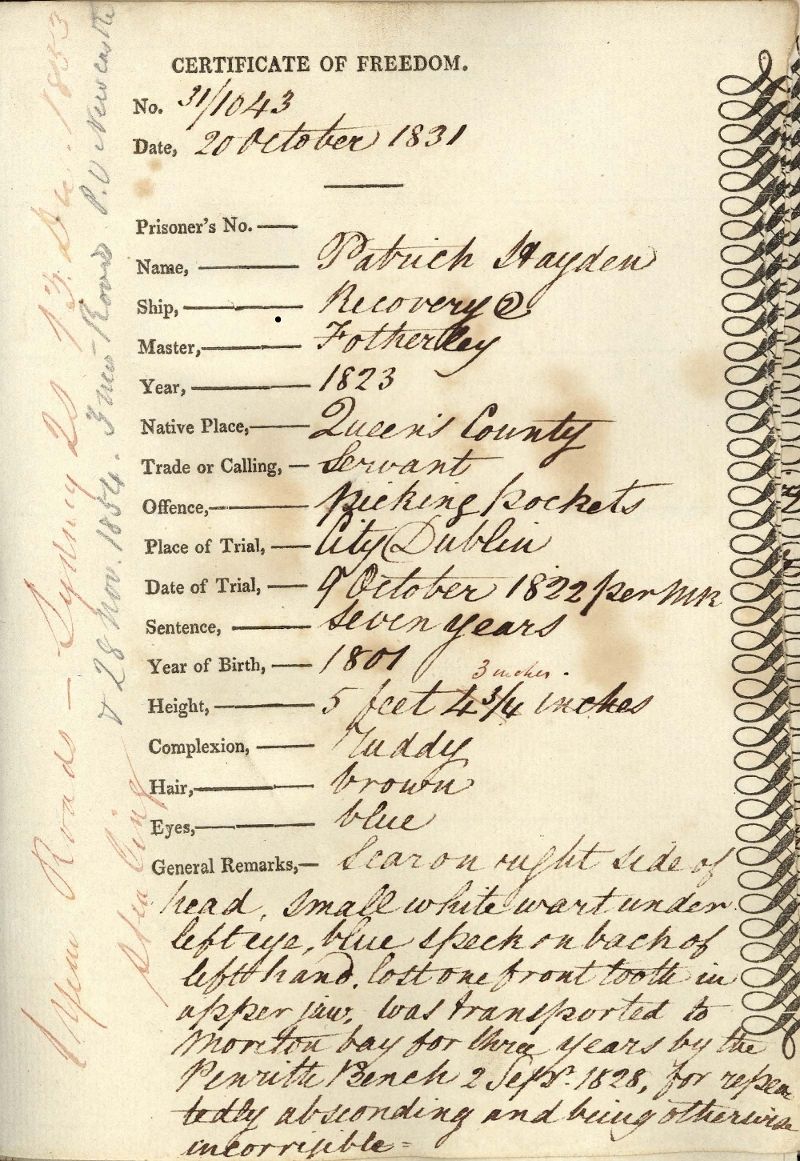
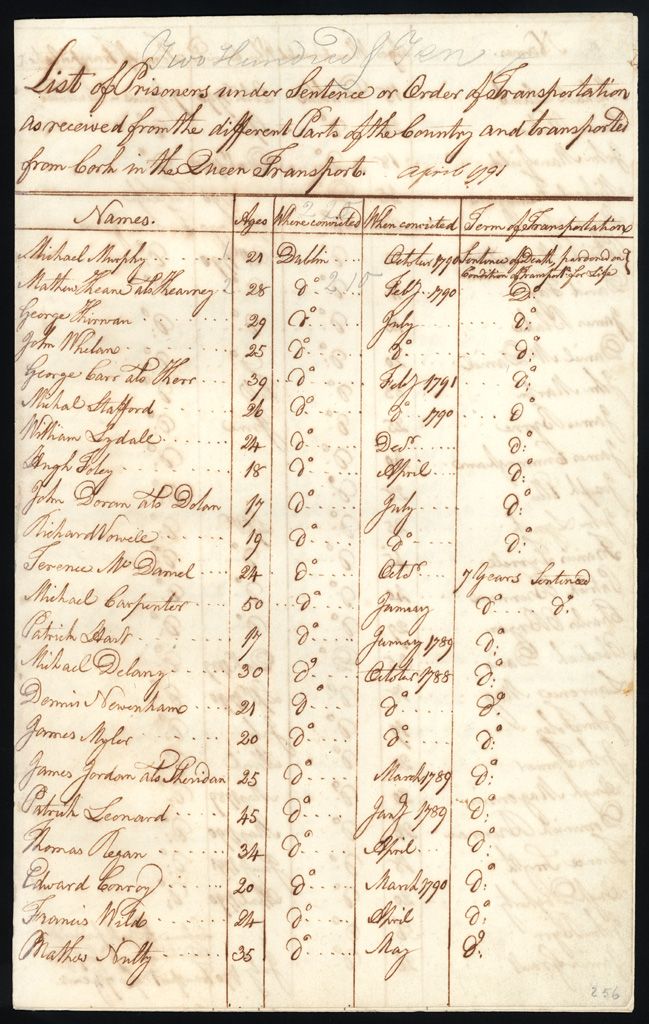
On this day in 1838 the Select Committee of the House of Commons in Great Britain delivered its report criticizing transportation. The report recommended the abolition of transportation to NSW but was prepared to allow its continuance to Van Dieman's Land. An Order-in-Council ending transportation of convicts (UK), passed on the 22 May 1840 and effectively meant that NSW became a free colony.
August 4
On this day in 1906 the Central Railway Station in Sydney was officially opened. It is the largest railway station in Australia, servicing almost all of the lines on the railway network in Sydney. This was the third station on the southern Sydney site and was built on land previously used by the Devonshire St Cemetery, a convent, a female refuge, police barracks and the Benevolent Society. The first train at the new station was the Western Mail train which arrived at 5.50am on 5 August 1906. The 75m Gothic revival clock tower was added to the northwestern corner of the station in 1921.
August 8
On this day in 1789 the first police force in NSW was formed. From the beginnings of the Colony the Royal Marines were meant to undertake the policing role but they proved disinclined to police errant convicts. Therefore Governor Phillip established a civilian police force made up of 12 well-behaved convicts. In 1810 Governor Macquarie re-organised the growing force, establishing police districts and ranks. In 1862 the Mounted, Water, Border, Native and Sydney Police units were amalgamated into one Police force.
- See Archives in Brief 20 Police Service Records for more details
- See entry in Colonial Secretary's Papers under POLICE
August 9
On this day in 1890 the first recital on the Grand Organ in the Sydney Town Hall was held. At the time, the organ was the largest pipe organ in the world. It was built by English firm William Hill & Son before being dismantled and shipped to Sydney. The recital was performed by W T Best, the City Organist from Liverpool, England. An extensive repair program was carried out on the organ between 1972-82.
August 10
On this day in 1894 the new Sydney Hospital opened. When Governor Macquarie arrived in the Colony in 1810 the hospital was housed in tents in George St in The Rocks. Macqaurie had the 'Rum Hospital' built on Macquarie St but from the outset there were problems with the shoddy construction. The central building of the 'Rum Hospital' was demolished in 1879 to make way for a new Victorian Classical Revival building designed by Thomas Rowe. Problems with the budget meant the Hospital was not finished until 1894 under a revised design by architect John Kirkpatrick. Sydney Hospital is the oldest hospital in Australia.
August 11
On this day in 1824 New South Wales was constituted a Crown Colony. The Colony as it was established in 1788 was a penal colony. Crown Colony status was the first step towards responsible government; NSW had more freedom but the administration and legislature was still controlled by the British Crown. The NSW Act 1823 (UK) authorised the establishment of a Legislative Council and Supreme Court. The twelve members of the Legislative Council were appointed by Britain's Secretary of State. See The Governor, Despatches from the Secretary of State, NRS 4512 [4/1310 Despatch No. 96, 1840], available at the Western Sydney Records Centre.
August 12
On this day in 1920 Louisa Lawson died. Louisa Lawson may be familiar to many as the mother of poet Henry Lawson. Louisa is also remembered as a writer, poet, newspaper proprietor and suffragist in her own right.
August 13
On this day in 1806 Captain William Bligh became Governor of New South Wales, replacing Philip Gidley King. Bligh is perhaps best remembered for his overthrow in the Mutiny on the Bounty but he was also the only governor deposed by military coup in 1808 in the so-called 'Rum Rebellion'. Bligh was picked as King's replacement due to his reputation as a hard man and he attempted to normalise trading conditions in the Colony by prohibiting the use of spirits as payment. Although Bligh was deposed on 26 January 1808, he remained in Van Dieman's Land and Sydney until his replacement, Lachlan Maquarie, arrived on 1 January 1810.
August 15
On this day in 1904 the Seat of Government Act named Dalgety as the site of the future Federal Capital Territory (now ACT). The site turned out to be unacceptable to the NSW Government, due partly to Dalgety's distance from Sydney and close proximity to Victoria. The Act was repealed in 1908 and Dalgety was replaced by Canberra as the new site for the capital of the ACT.
August 16
On this day in 1890 the Australian Maritime Dispute, more commonly known as the Maritime Strike, began when officers and seamen walked off their ships in Sydney. This marked the beginning of a strike that lasted until November 1890. The Mercantile Marine Officers' Association called for the strike over outstanding pay and work condition claims. The strike soon spread to wharf labourers, gas stockers, coal miners and wool shearers in Victoria and Queensland and to New Zealand. The strike also marks the first time military units were deployed against the strikers in NSW and Victoria.
August 17
On this day in 1801 the Female Orphan School officially opened. The School was founded by Governor King and housed 31 girls who were taught needlework, spinning, reading and some writing. By May 1803 there were 104 girls at the Orphan School. Reverend Samuel Marsden performed a special ceremony and sermon for the opening.
August 19
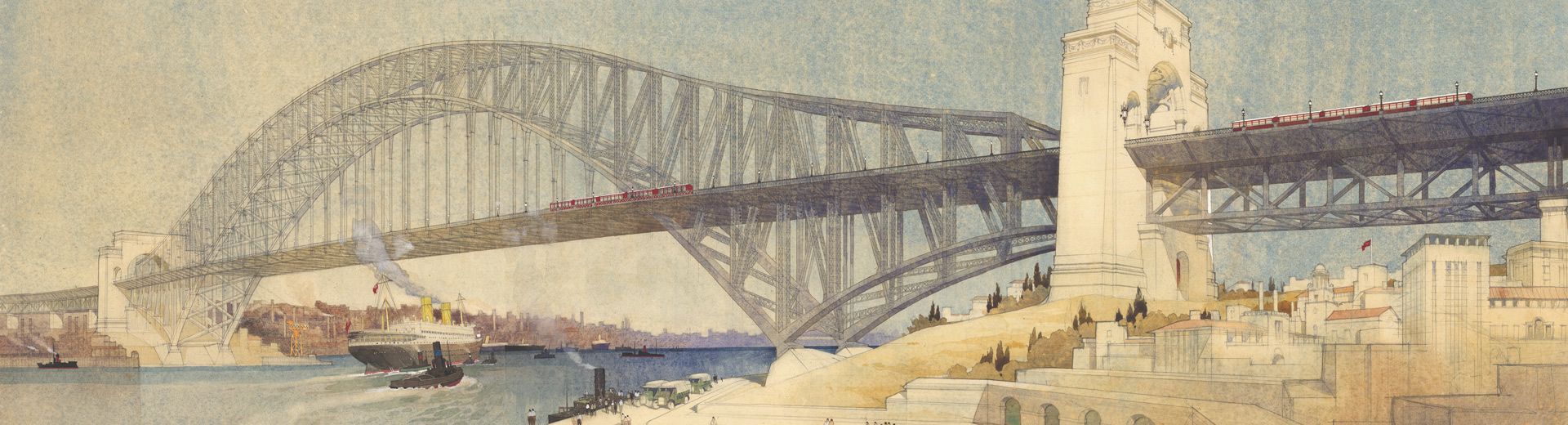
On this day in 1930 the two halves of the Sydney Harbour Bridge were joined at 10pm. The two half arches were fabricated from steel in workshops before being loaded onto barges and towed into position. The arches were then lifted up by two 580 tonne electrically operated creeper cranes. The arch spans 503m and the summit is 134m above sea level. Steel decking was then hung from the arches over the next nine months.
August 20
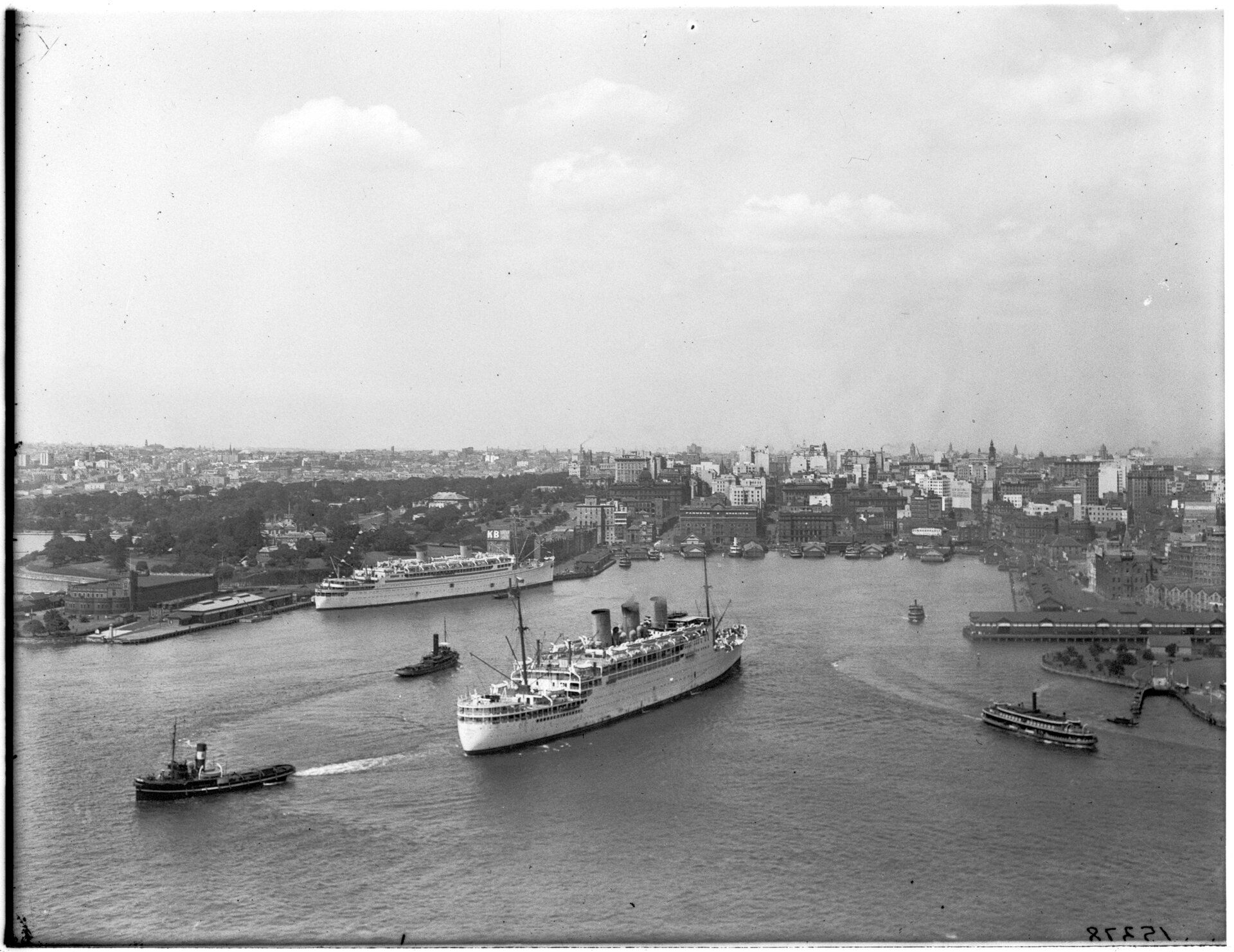
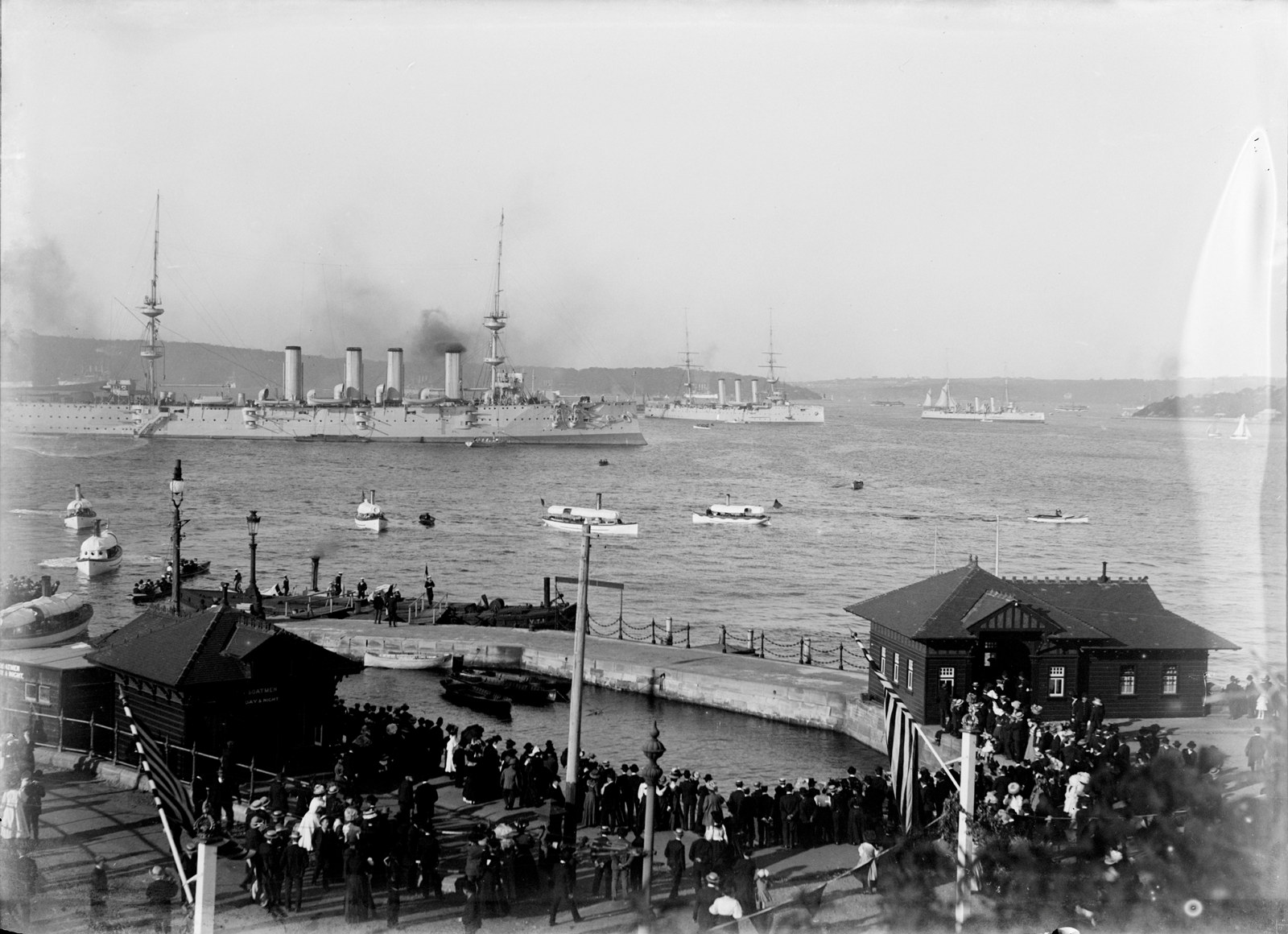
On this day in 1908 the United States of America naval fleet arrived at Port Jackson, Sydney. This was part of a round the world cruise by the fleet which had originally set out on 16 December 1907. The sixteen warships were painted white to denote peace. They became known as The Great White Fleet.
August 21
On this day in 1801 the government farm at Toongabbie was closed and replaced by a new farm at Castle Hill. Toongabbie had been the site of the third main settlement in the Colony after Sydney and Parramatta. The farm was established in 1791 and by December 1792 there were 500 convicts working on the site.
August 25
On this day in 1824 the first meeting of the Legislative Council of NSW was held in Government House in Sydney. The Legislative Council had five members appointed by Britain's Secretary of State and was presided over by Governor Brisbane. The members were all holders of public office: the Colonial Secretary, Major Frederick Goulburn, the Chief Justice Francis Forbes, the Surveyor General John Oxley, the Principal Surgeon James Bowman and the Lieutenant Governor, Colonel William Stewart. By the next year the Council had seven members and included some Colonists not holding public office, like landowner, John Macarthur. An Executive Council was also created in 1825. The Legislative Council had no real law-making power as only the Governor could initiate a bill and he maintianed veto powers. The first act, a Currency Act, was passed on 28 September 1824.
August 27
On this day in 1902 the Women's Franchise Act gave women the right to vote in state elections in NSW. Sir Henry Parkes had introduced electoral reform bills in 1890 and 1891 which included provisions for women to vote but both bills were defeated. The Women's Franchise Act passed on the third attempt and followed similiar success on the Federal stage, when Australia became the second nation in the world to give women the right to vote. Women could not stand for election for the Legislative Council until 1925 and the first woman Member of Parliament was Millicent Preston-Stanley.
August 29
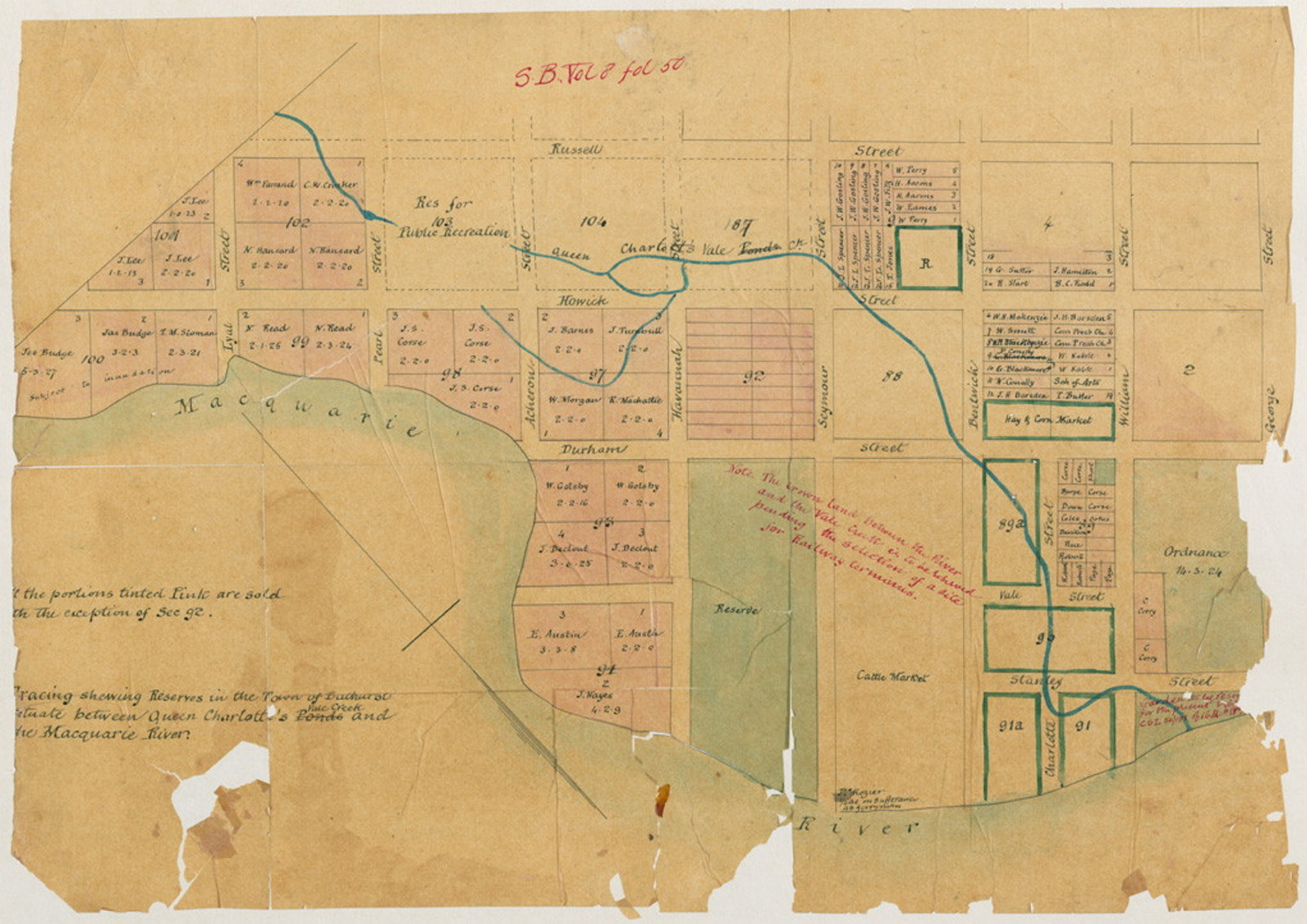
On this day in 1817 explorers John Oxley and George Evans arrived back in Bathurst after exploring the Lachlan and Macquarie rivers. Oxley, the Surveyor General and Evans, his deputy, left Sydney on 6 April and travelled to Bathurst before setting off to follow the course of the Lachlan River. By July the party had become stuck in marshlands and had to turn northwards to follow the Macquarie River back to Bathurst. Oxley thought this land to be uninhabitable due to the swamps but it is now rich pasture and grazing land.
- See Digital Gallery: Celebrating 50 Years at State Records NSW
- See entry in Colonial Secretary's Papers under John Oxley
- See entry in Colonial Secretary's Papers under George Evans
August 30
On this day in 1870 the Intercolonial Exhibition of General Industries and Arts opened in Sydney. It was held at the Exhibition Building at Prince Alfred Park in Surry Hills and was a preparatory display for the International Exhibition in London in the following year. The NSW Agricultural Society organised the Exhibition to mark the centenary of Captain Cook's landing at Botany Bay. All the Australian states and New Zealand were invited to submit a display. Prince Alfred Park was the first park to be laid out in connection with a major Exhibition and a number of the design elements from the 1870 plan still exist, such as the Moreton Bay fig trees along the boundaries.